

Stucco-clad homes and buildings can conceal moisture intrusion, installation defects, and hidden substrate damage that may not be visible during a general home inspection. At Real Estate Inspections, we provide specialized stucco inspection and stucco moisture testing services to help buyers, sellers, homeowners, agents, attorneys, and property managers evaluate the condition of hardcoat stucco, EIFS, and other adhered exterior cladding systems.
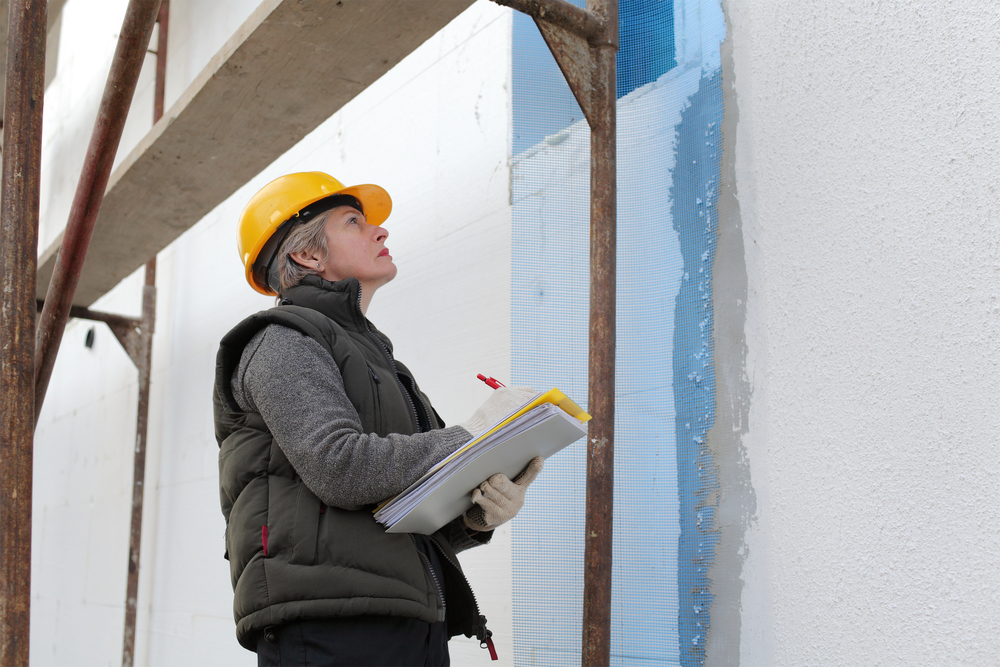
Our process-driven stucco inspections include a careful visual evaluation of the cladding system, with attention to material defects, flashing details, installation deficiencies, termination points, and moisture-prone areas around windows, doors, roof intersections, penetrations, and attachments. When warranted, we also use infrared thermal imaging, non-invasive moisture screening, and authorized invasive moisture testing to help identify concealed moisture-related concerns. The goal of the inspection is to identify visible defects, underlying conditions, and likely moisture intrusion pathways so that remediation can be properly scoped and focused on the repairs that are truly needed. This helps avoid unnecessary or excessive work while supporting a durable, high-performing cladding system over the long term.
Certified by the Moisture Warranty Corporation. We perform our inspections in accordance with the Standards of Practice of the Exterior Design Institute (EDI) and the EIFS Industry Members Association (EIMA).
Stucco and other adhered cladding systems can perform well when properly designed and installed, but they can also conceal serious defects when moisture is allowed to enter the wall assembly and remain trapped. In many cases, problems are not obvious from the surface alone. Cracks, sealant failures, improper terminations, missing or ineffective flashing, insufficient drainage, and poor integration at windows, doors, roofs, decks, and penetrations can all contribute to concealed moisture intrusion.
A targeted stucco inspection may be appropriate when:


We do NOT perform any remediation or repair work. We are not stucco remediation/installation contractors. We are certified leak detection experts who provide and unbiased, professional, third party reporting on the condition of the structure.

The exact scope depends on the property, the type of cladding system, accessibility, and the level of testing authorized, but our stucco inspection process may include the following:
Visual Evaluation of the Exterior Cladding System
We inspect readily accessible exterior wall surfaces and visible cladding details for signs of distress, cracking, movement, impact damage, staining, sealant failure, improper clearances, inadequate terminations, deteriorated components, and other observable defects.
Review of Key Leakage-Prone Areas
We give special attention to areas where failures are commonly found, including:
Infrared Imaging and Moisture Screening
When conditions are suitable, infrared imaging and non-invasive moisture screening may be used as diagnostic support tools to help identify areas that warrant closer evaluation. These tools can help identify anomalies, but they do not by themselves confirm concealed damage or active leakage.
Invasive Moisture Testing When Authorized
When invasive testing is part of the agreed scope, strategically selected test locations are probed using appropriate methods to assess moisture conditions within the wall assembly. Test locations are chosen based on observed conditions, known risk points, elevated readings, thermal anomalies, visible distress, and field judgment.
Documentation and Reporting
Our report is designed to clearly communicate the observed conditions and may include:
Not every stucco evaluation involves the same level of testing.
Visual-Only Stucco Review
A visual-only review is limited to conditions that can be observed without invasive testing. This type of inspection may identify cracking, staining, failed sealants, improper clearances, visible termination problems, and other surface concerns, but it cannot reliably determine whether concealed moisture intrusion or substrate damage is present within the wall assembly.
Stucco Moisture Testing
Stucco moisture testing goes further by incorporating diagnostic tools and, when authorized, invasive probing at selected locations. This can provide more meaningful information about whether elevated moisture conditions exist behind the cladding and whether concealed damage risk may be present.
When the concern involves hidden moisture intrusion, a visual-only inspection is often not enough.
Our stucco inspection report is intended to help clients make more informed decisions. Depending on the scope of work and observed conditions, the report may help you better understand:
Our stucco inspections are commonly ordered by:
Whether you are trying to understand risk before a purchase, document conditions before listing, investigate a suspected problem, or obtain a more informed opinion before repairs, we tailor the inspection to the property and the goals of the client.
Why Choose Real Estate Inspections
At Real Estate Inspections, we approach stucco inspections with a practical, field-based process focused on real-world failure points and meaningful reporting. We understand that stucco concerns are often tied to significant financial decisions, liability questions, negotiation strategy, and long-term durability concerns. Our role is to provide an independent, well-documented evaluation that helps clients better understand what was observed, what the findings may mean, and what next steps may be appropriate.
Clients choose us because we provide:
Service Area
We provide stucco inspection and moisture testing services in:
Southeastern Pennsylvania
Including Philadelphia and surrounding areas such as Delaware County, Chester County, Montgomery County, Bucks County, and Berks County.
Central and Southern New Jersey
Including Burlington County, Camden County, Gloucester County, Salem County, Cumberland County, Atlantic County, and surrounding areas.
Northern Delaware
Including New Castle County and nearby service areas.
Maryland
Including selected service areas in Northeastern Maryland, the Baltimore region, and surrounding communities, subject to scheduling and travel availability.
Southwest Florida
Including Punta Gorda, Port Charlotte, North Port, Venice, Englewood, Cape Coral, Fort Myers, Naples, and surrounding communities, subject to scheduling and travel availability.
If your property is outside our standard coverage area, contact us to discuss availability and travel options.
FAQ
What is a stucco inspection?
A stucco inspection is a focused evaluation of a stucco or similar exterior cladding system to identify visible defects, moisture intrusion risk, and conditions that may contribute to concealed damage.
Do I need invasive moisture testing?
Not every property requires invasive testing, but when there is concern about hidden moisture intrusion, invasive testing is often the most meaningful way to assess conditions behind the cladding at selected locations.
Can a home inspection alone determine whether stucco has hidden damage?
No. A general home inspection may note visible concerns, but concealed moisture intrusion within stucco wall assemblies often requires a more targeted stucco inspection and, where appropriate, moisture testing.
Do you inspect EIFS and synthetic stucco systems?
Yes. We commonly inspect traditional stucco, EIFS, and related exterior cladding systems, including areas where stucco interfaces with other materials.
What happens if elevated moisture is found?
If elevated moisture or material defects are identified, the report will document the findings and may recommend repair, further invasive evaluation, or consultation with an appropriate specialty contractor, envelope consultant, or other qualified professional depending on the circumstances.
Is your inspection report helpful for buyers and sellers?
Yes. Buyers often use the inspection to better understand risk before closing, while sellers may use it to document condition, plan repairs, or address concerns before listing or negotiation.
Do you inspect commercial or multi-family buildings?
Yes. We inspect many types of residential properties and may also evaluate multi-family and selected commercial buildings, depending on size, access, and scope.
Schedule a Stucco Inspection
If you are purchasing, selling, owning, managing, or investigating a stucco-clad property, Real Estate Inspections can help you better understand the condition of the cladding system and whether additional action may be warranted.
Contact Real Estate Inspections today to schedule a stucco inspection or stucco moisture testing service in Pennsylvania, New Jersey, Delaware, Maryland, or Southwest Florida.